Lesson 17 · 17 of 20
forEach, map, where, reduce and fold · Dart
Go through and transform Dart collections with forEach, map, where, reduce and fold, and chain them to filter, convert and add up in one go.
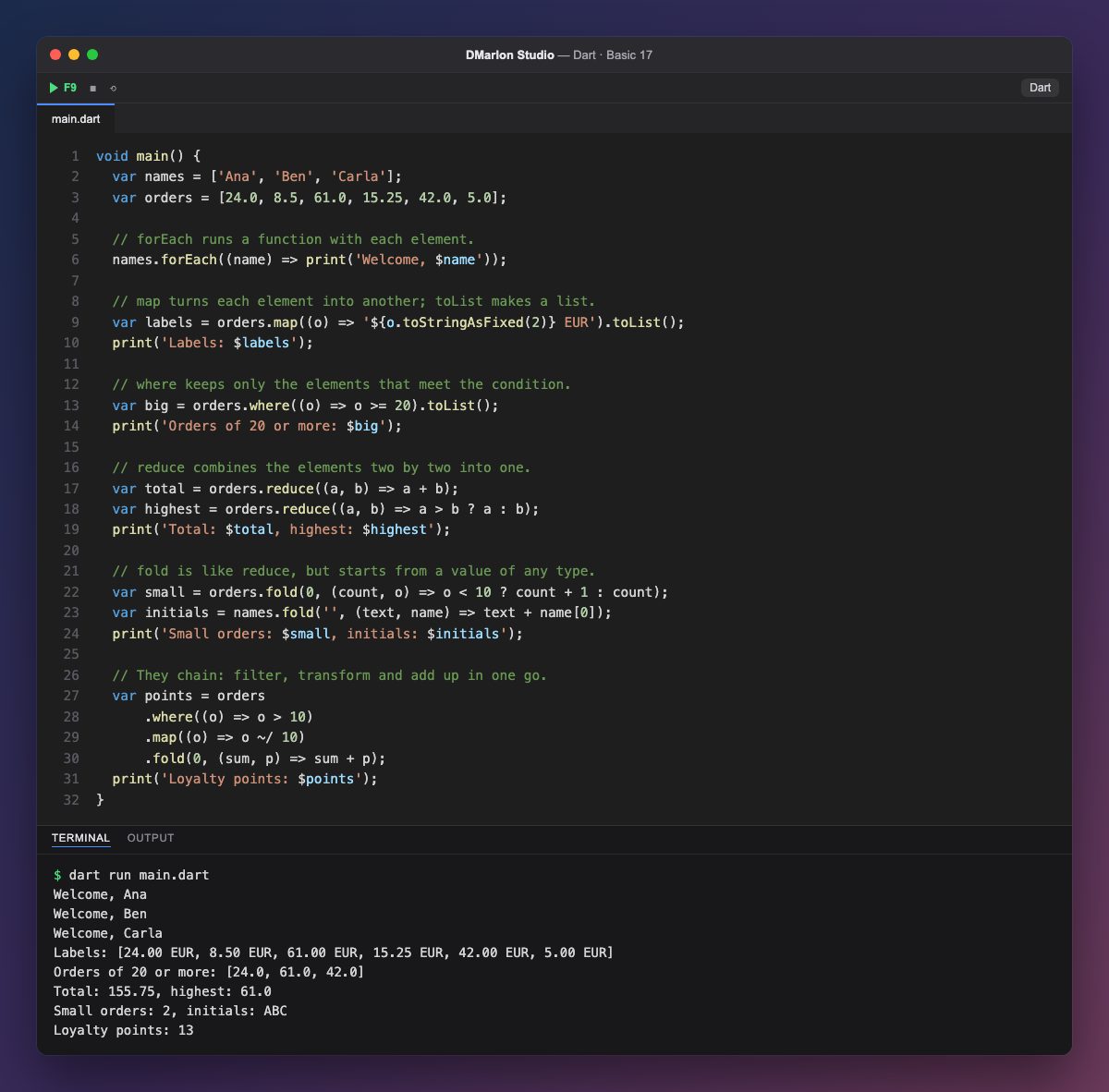
These methods take an anonymous function (lesson 13) and apply it to each element. `forEach` simply runs it with each one: names.forEach((name) => print('Welcome, $name')) greets all three.
`map` turns each element into something else: each order becomes a label like 24.00 EUR. `where` keeps only the elements that meet the condition, here orders of 20 euros or more. Both give back a sequence, which `toList()` turns into a list.
`reduce` combines the elements two at a time until only one is left: with (a, b) => a + b it keeps adding and gives the total, 155.75, and with (a, b) => a > b ? a : b it keeps the larger one at each step, 61.0.
`fold` is like reduce, but it starts from an initial value, which can even be of another type: fold(0, ...) counts the small orders starting from 0, and fold('', ...) builds a string with the initials of a list of names.
Since each method returns a collection, they can be chained: the last example keeps the orders over 10 euros with where, turns each one into points with map and ~/, and adds them up with fold. It reads from top to bottom, like a recipe.
Code · main.dart
void main() { var names = ['Ana', 'Ben', 'Carla']; var orders = [24.0, 8.5, 61.0, 15.25, 42.0, 5.0]; // forEach runs a function with each element. names.forEach((name) => print('Welcome, $name')); // map turns each element into another; toList makes a list. var labels = orders.map((o) => '${o.toStringAsFixed(2)} EUR').toList(); print('Labels: $labels'); // where keeps only the elements that meet the condition. var big = orders.where((o) => o >= 20).toList(); print('Orders of 20 or more: $big'); // reduce combines the elements two by two into one. var total = orders.reduce((a, b) => a + b); var highest = orders.reduce((a, b) => a > b ? a : b); print('Total: $total, highest: $highest'); // fold is like reduce, but starts from a value of any type. var small = orders.fold(0, (count, o) => o < 10 ? count + 1 : count); var initials = names.fold('', (text, name) => text + name[0]); print('Small orders: $small, initials: $initials'); // They chain: filter, transform and add up in one go. var points = orders .where((o) => o > 10) .map((o) => o ~/ 10) .fold(0, (sum, p) => sum + p); print('Loyalty points: $points');}Output · dart run main.dart
Welcome, Ana
Welcome, Ben
Welcome, Carla
Labels: [24.00 EUR, 8.50 EUR, 61.00 EUR, 15.25 EUR, 42.00 EUR, 5.00 EUR]
Orders of 20 or more: [24.0, 61.0, 42.0]
Total: 155.75, highest: 61.0
Small orders: 2, initials: ABC
Loyalty points: 13
Key points
forEachruns a function with each element.maptransforms;wherefilters.toList()turns the result into a list.reducecombines everything into one value;foldtoo, from a starting value.- The methods chain:
where(...).map(...).fold(...).
Exercise
With a list of ages, use where to keep the adults, map to turn them into 'X years' labels, and fold to add up all the ages.